The Vision for Tomorrow's Manufacturing Workforce
11 Mar, 2026

The United Kingdom's manufacturing sector has delivered an extraordinary performance in 2025...

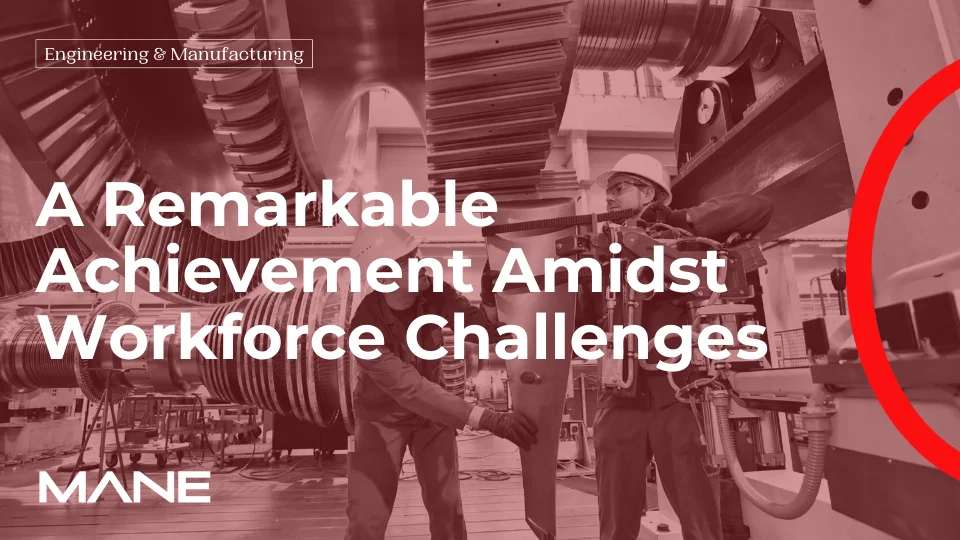
The United Kingdom's manufacturing sector has delivered an extraordinary performance in 2025, with output values surging by £21 billion despite significant headwinds including workforce reductions and a declining number of manufacturing facilities. According to comprehensive analysis of Office for National Statistics data conducted by FourJaw Manufacturing Analytics, this remarkable achievement represents the fifth consecutive year of output and productivity growth for British manufacturing. The sector's resilience demonstrates a fundamental transformation in how UK factories operate, with smart technology adoption and operational efficiency driving unprecedented gains. This growth occurred whilst the manufacturing workforce contracted by over 36,000 employees and the number of manufacturing companies decreased by 2,500, highlighting a profound shift towards productivity-led expansion rather than labour-intensive growth models. The total value of factory production reached nearly £639 billion in 2025, representing a 3.4% increase year-on-year and marking output levels 27.8% higher in real terms than 2020 figures. This performance signals not merely recovery from previous challenges but genuine sectoral transformation, positioning UK manufacturing as a beacon of industrial innovation and operational excellence within the global economy.
The £21 billion increase in manufacturing output was far from uniform across all sectors, with particular industries demonstrating exceptional performance that drove the overall growth trajectory. Aerospace manufacturing emerged as the standout performer, contributing £6.7 billion in additional output, reflecting both robust global demand for aircraft components and the UK's strengthened position within international aerospace supply chains. The chemical and pharmaceutical sectors collectively added £4.2 billion to manufacturing output, benefiting from continued investment in life sciences infrastructure and the UK's reputation for pharmaceutical innovation and quality production. Metal and machinery production contributed £2.6 billion to the growth figure, whilst computers and electrical products manufacturing added £1.9 billion, demonstrating the breadth of industrial capability across British manufacturing. These multi-billion-pound gains reflect strategic investments in advanced manufacturing capabilities, automation technologies, and workforce upskilling initiatives that have transformed production efficiency. After adjusting for inflation, FourJaw estimates that UK manufacturing productivity increased by 1.4%, equivalent to £8.9 billion in real terms compared to 2024. Perhaps most significantly, average output per manufacturing employee increased by 2.9% year-on-year, representing approximately £7,000 additional output per worker in real terms. This productivity enhancement demonstrates that manufacturers have successfully implemented operational improvements, invested in workforce development, and adopted technologies that amplify human capability rather than simply replacing workers with automation.
Whilst headline figures paint an encouraging picture, the manufacturing landscape in 2025 revealed significant disparities between thriving sectors and those facing substantial challenges. Food manufacturing experienced a complex year, with nominal output values reaching £109 billion, driven primarily by food price inflation that peaked at 4.7% in August. However, when adjusted for inflation, food production actually declined by 1% in real terms, representing a £1.1 billion decrease from the previous year. This divergence between nominal and real performance highlights the challenges facing food manufacturers, who struggled to maintain volume growth amidst rising input costs, changing consumer purchasing patterns, and intense competition from international producers. The automotive manufacturing sector faced particularly acute difficulties throughout 2025, with output declining by nearly £5.4 billion, representing a 7% contraction. Motor vehicle and trailer production encountered multiple simultaneous challenges including reduced domestic demand as consumers delayed major purchases amidst economic uncertainty, export tariffs that impacted competitiveness in key markets, ongoing trade uncertainty affecting long-term investment decisions, and significant disruption from a major cyberattack that compromised production systems and supply chain coordination. These contrasting fortunes illustrate the complexity of modern manufacturing, where sector-specific factors, global market dynamics, and technological vulnerabilities can dramatically influence performance regardless of broader economic trends. Understanding these nuances remains essential for policymakers, investors, and industry leaders seeking to support sustainable manufacturing growth across all subsectors whilst addressing the unique challenges facing struggling industries.
The manufacturing sector's ability to deliver £21 billion in additional output despite workforce reductions and facility closures reflects fundamental changes in how British manufacturers approach operational challenges. Chris Iveson, CEO at FourJaw Manufacturing Analytics, observed: "UK manufacturing is proving that resilience and innovation are winning the day. To deliver £21bn more in output is a phenomenal achievement given current workforce challenges and points to a sector successfully embracing continuous improvement and productivity-enhancing technology. The resurgence of UK manufacturing is down to smart, efficient production and maximising the output of every machine and every employee." This perspective highlights the strategic pivot towards technology-enabled productivity that characterises successful modern manufacturing. Companies have invested substantially in Industrial Internet of Things sensors, artificial intelligence-driven predictive maintenance systems, and advanced analytics platforms that optimise production scheduling and minimise downtime. These technological investments enable manufacturers to extract maximum value from existing equipment and personnel, creating competitive advantages that transcend traditional cost-based competition. However, significant challenges remain, particularly regarding workforce development and the skills gap that threatens future growth. The 36,000-person workforce reduction partly reflects demographic trends, with experienced workers retiring faster than younger employees enter manufacturing careers. Addressing this requires concerted efforts to enhance manufacturing's appeal to younger talent, improve career progression pathways, and demonstrate the sector's technological sophistication. Opportunities abound for manufacturers willing to embrace digital transformation, sustainable production methods, and advanced manufacturing techniques including additive manufacturing and advanced materials processing that position UK factories at the innovation frontier.
The manufacturing sector's productivity-driven growth model has profound implications for recruitment strategies, talent acquisition approaches, and employer branding initiatives throughout 2026 and beyond. Traditional hiring trends emphasised volume recruitment to support production expansion, but contemporary manufacturing requires fundamentally different recruitment approaches focused on quality over quantity. Manufacturers increasingly seek candidates with hybrid skill sets combining traditional engineering knowledge with digital literacy, data analysis capabilities, and adaptability to rapidly evolving production technologies. This shift demands that hiring managers reconsider job specifications, moving beyond conventional qualifications to identify candidates demonstrating learning agility and technological aptitude. Talent acquisition teams face the challenge of competing not only with other manufacturers but with technology companies, professional services firms, and other sectors offering attractive compensation and perceived career advantages. Effective employer branding becomes critical, showcasing manufacturing as a high-technology sector offering meaningful work, competitive remuneration, and genuine innovation opportunities. Recruitment strategies must emphasise career development pathways, ongoing training commitments, and the intellectual challenges inherent in modern manufacturing roles. The sector's productivity gains demonstrate that manufacturers can achieve growth with leaner workforces, but this requires recruiting exceptional talent capable of operating sophisticated equipment, interpreting complex data, and contributing to continuous improvement initiatives. Forward-thinking manufacturers are partnering with educational institutions, developing apprenticeship programmes aligned with Industry 4.0 requirements, and creating talent pipelines that address long-term workforce needs. Hiring trends increasingly favour candidates with experience in automation, robotics, data analytics, and process optimisation, reflecting manufacturing's technological evolution. Recruitment marketing must communicate these opportunities effectively, challenging outdated perceptions of manufacturing work and highlighting the sector's transformation into a digitally-enabled, innovation-driven industry offering compelling career prospects for ambitious professionals.
Looking forward, sustaining and building upon 2025's remarkable performance requires strategic focus across multiple dimensions of manufacturing capability and competitiveness. Investment in advanced manufacturing technologies must continue, with particular emphasis on artificial intelligence applications, collaborative robotics, and digital twin technologies that enable virtual production optimisation before physical implementation. Manufacturers should prioritise operational resilience, developing robust cybersecurity frameworks, diversified supply chains, and contingency planning that mitigates disruption risks highlighted by the automotive sector's challenges. Sustainability initiatives will increasingly influence competitiveness, with customers, investors, and regulators demanding demonstrable progress towards net-zero manufacturing, circular economy principles, and reduced environmental impact. Companies should develop comprehensive sustainability strategies integrating energy efficiency improvements, renewable energy adoption, and sustainable materials sourcing. Collaboration between manufacturers, government, and educational institutions remains essential for addressing skills challenges and ensuring talent pipelines meet evolving industry requirements. Policymakers should consider targeted support for struggling subsectors, particularly automotive and food manufacturing, whilst avoiding interventions that distort market dynamics or reduce competitive pressure driving productivity improvements. Manufacturers must maintain focus on continuous improvement methodologies, operational excellence frameworks, and employee engagement initiatives that harness workforce expertise for innovation and efficiency gains. The £21 billion output increase demonstrates what UK manufacturing can achieve through strategic technology adoption, operational discipline, and workforce development. Building on this foundation requires sustained commitment to innovation, investment in people and technology, and recognition that manufacturing competitiveness increasingly depends on productivity, quality, and innovation rather than cost minimisation alone. The sector's future success will be determined by its ability to attract exceptional talent, embrace technological transformation, and deliver products that compete globally on performance, sustainability, and innovation rather than price alone.