The History of Martin-Baker and the Ejection Seat
24 Mar, 20264 MINEight Decades of Engineering for Life In a factory in Higher Denham, Buckinghamshire, a...
Eight Decades of Engineering for Life
In a factory in Higher Denham, Buckinghamshire, a family business has spent more than eight decades solving one of aviation's most urgent problems: how to get a pilot safely out of an aircraft that is about to kill them. Martin-Baker Aircraft Company Limited, founded by Sir James Martin and Captain Valentine Baker, has saved over 9,800 lives since the first live ejection test in 1945. Its seats are fitted into more than 200 aircraft types and supplied to 93 air forces worldwide. The company manufactures the ejection seat for the F-35 Lightning II, the most advanced combat aircraft in Western service. It is, by any measure, one of the most consequential contributions to aviation safety in history. But the story of how it came to be is one of personal loss, wartime necessity, and an engineer's singular determination to prevent the deaths of pilots he felt responsible for.
James Martin and Valentine Baker
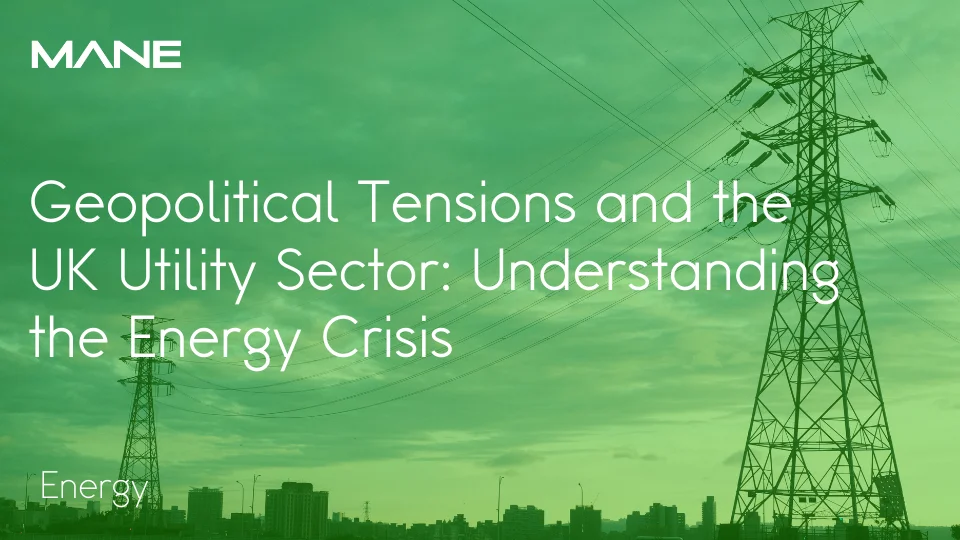
James Martin was born in County Down, Ireland, in 1901. By his own account, he was fascinated by engineering from boyhood, and by his mid-twenties had established himself as a capable designer and manufacturer of aircraft structures. Martin's Aircraft Works was founded at Denham in Buckinghamshire in partnership with Captain Valentine Baker, a highly experienced test pilot whose flying skill and practical judgment complemented Martin's engineering talent. With financial support from businessman Francis Francis, the two men built a series of prototype aircraft through the 1930s, including the MB.1, MB.2, and MB.3.
The partnership ended in tragedy on 12 September 1942, when Baker was killed during a test flight of the MB.3 when the aircraft's engine failed and Baker was unable to escape. His death affected James Martin profoundly. Martin had always been interested in the problem of pilot escape, having investigated the concept from as early as 1934, several years before Germany and Sweden began exploring similar ideas in 1938. But Baker's death transformed that intellectual interest into a personal mission. Pilot safety became the defining purpose of Martin's working life, and the company's direction shifted decisively towards escape systems.
The Development of the First Ejection Seat
In 1944, the Ministry of Aircraft Production formally approached James Martin and asked him to investigate the practicability of providing fighter aircraft with a means of assisted escape. The challenge was acute: jet aircraft were entering service for the first time, and their speeds were making the traditional practice of climbing out of a cockpit and parachuting away increasingly impractical. At 400 miles per hour, the windblast alone could render a pilot unconscious or kill him before he could clear the aircraft.
Martin concluded that the most effective solution was to eject the seat itself, with the pilot sitting in it, using an explosive charge. After separation from the aircraft at a safe height, the pilot would disengage from the seat and deploy a parachute manually. The fundamental challenge was determining how much force the human spine could withstand during the explosive ejection sequence. No reliable data existed. Martin constructed a 16-foot test rig at Denham and, on 20 January 1945, fired a dummy loaded to 200 pounds up the rig for the first time. Four days later, one of the company's experimental fitters, Bernard Lynch, became the first human being to ride the rig in a live test, reaching a height of just under five feet before reporting the onset of discomfort. Progressive increases in cartridge power were tested, and the seat design was refined to reduce peak acceleration and protect the spine.
The first airborne live ejection took place on 24 July 1946, when Bernard Lynch ejected from a Gloster Meteor travelling at 320 miles per hour at 8,000 feet over Chalgrove Airfield in Oxfordshire. The test was successful, and Lynch became not only the first person to eject from an aircraft in Britain but a pioneering figure in the history of aviation safety. The Meteor aircraft became the company's dedicated testbed for ejection seat development, and two Meteors remain in service with Martin-Baker to this day for precisely that purpose.
From First Generation to Zero-Zero
The early ejection seats required pilots to be at a minimum height and speed to ensure the parachute had enough altitude and time to deploy safely. This was a significant limitation: a pilot encountering an emergency during take-off or landing had no effective means of escape. Through the 1950s and 1960s, Martin-Baker developed successive generations of seats with progressively wider operational envelopes. The Mk2, which entered service with the RAF in 1953 as the world's first fully automatic aircraft escape system, included a barostatically controlled automatic parachute opening mechanism, removing the need for the pilot to pull a ripcord manually. In March of that year, Bernard Lynch made the first high-altitude live ejection from 30,000 feet.
The development of zero-zero capability, meaning the ability to eject safely at zero altitude and zero airspeed, was the next major milestone. This required the seat to generate enough upward thrust from a ground-level stationary position to lift the pilot to a height at which the parachute could deploy safely. Modern Martin-Baker seats achieve this through an Under Seat Rocket Motor that burns for a fraction of a second after the explosive catapult has cleared the seat from the aircraft, propelling the pilot to a safe ejection altitude even when the aircraft is on the ground and stationary.
In 2000, Lockheed Martin selected Martin-Baker over Goodrich as the ejection seat provider for all three variants of the F-35. The US16E seat supplied for the F-35 programme, a development of the Mk16 originally designed for the Eurofighter Typhoon and Rafale, incorporates three inflatable airbags activated by nitrogen on ejection to provide additional head and neck support, gyroscopic stabilisers, pilot weight indicators, and a pitot-static system feeding data to the seat's electronic sequencer to optimise the ejection sequence for the specific speed, altitude, and physical characteristics of the occupant at the moment of ejection. By January 2020, Martin-Baker had completed its 600th US16E seat for the F-35 programme.
The Ejection Tie Club
Every pilot whose life has been saved by a Martin-Baker seat is invited to join the Ejection Tie Club, which Sir James Martin founded in 1957. The first member was an RAF serviceman who ejected over what was then Rhodesia in January of that year. By 2025, the club had more than 6,000 registered members from air forces around the world, each of whom receives a certificate, membership card, tie, pin, and patch depicting the red triangle warning sign that is the international symbol for an ejection seat. The company has also partnered with watchmaker Bremont to produce a limited-edition timepiece exclusively for club members. The club is now run by Andrew Martin, the grandson of Sir James.
The Impact on Hiring
Martin-Baker's unique position as the world's dominant ejection seat manufacturer creates a specialised and highly skilled employment base centred on its Denham headquarters, with additional sites in France, Italy, and the United States. The work is deeply technical, spanning explosive ordnance design, pyrotechnics, avionics integration, materials engineering, and the complex biomechanics of human tolerance to high-g forces. It is also subject to exceptionally rigorous quality and safety standards: a failure in an ejection seat is, by definition, potentially fatal, and the company's quality culture reflects this.
For recruitment professionals, Martin-Baker represents a type of employer that is small in workforce terms but exceptional in the complexity and sensitivity of its work. The skills required are highly specialised and not easily transferable from other industries, which means that retention is as important as acquisition in workforce planning. The company's strong reputation and the profound significance of what it makes give it a compelling employer brand, but the work itself demands qualifications in mechanical, aerospace, or electronic engineering, often combined with experience in defence or safety-critical systems.
The F-35 programme's longevity, with aircraft expected to remain in service until the 2060s, means that Martin-Baker's involvement in its most important current contract will endure for decades. As GCAP moves towards its 2035 in-service date, the question of which company will provide the ejection seat for the next-generation fighter will become a significant procurement decision in its own right, one that carries both life-safety implications and substantial industrial value. For candidates with backgrounds in defence systems, propulsion, or safety-critical engineering, Martin-Baker represents one of the most distinctive and meaningful employment opportunities in the UK aerospace sector.
Related Posts

A Remarkable Achievement Amidst Workforce Challenges
19 Mar, 2026