The Dawn of AI-Driven Manufacturing Recruitment
08 Apr, 20264 MINThe manufacturing sector stands at a pivotal juncture where artificial intelligence is funda...

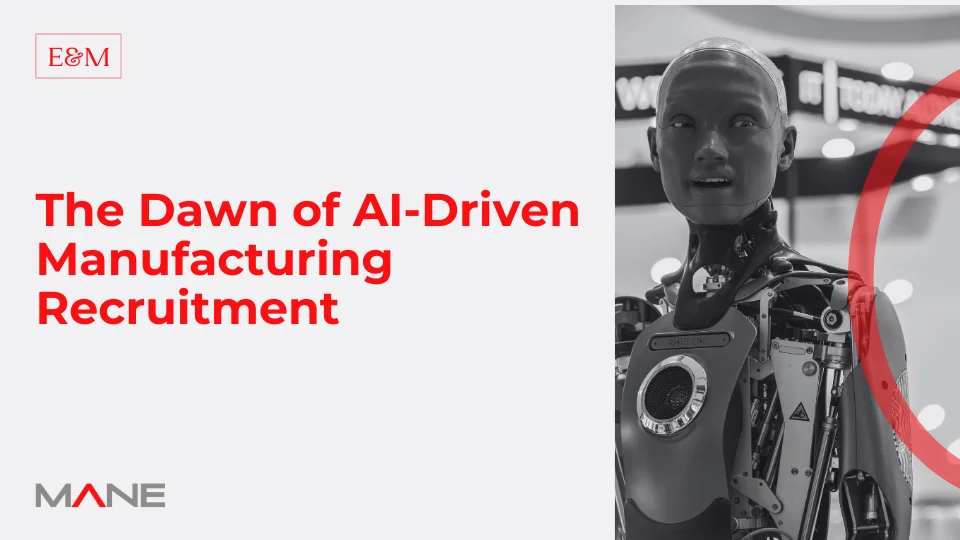
The manufacturing sector stands at a pivotal juncture where artificial intelligence is fundamentally reshaping not just production processes, but the very nature of talent acquisition and recruitment strategies. The recent announcement at CES 2026 of an expanded partnership between NVIDIA and Siemens has sent ripples through the industrial world, signalling a transformation that extends far beyond shop floors and digital twins. As Siemens President and CEO Roland Busch stated: "Together, we are building the Industrial AI operating system - redefining how the physical world is designed, built, and operated - to scale AI and make a real-world impact." This systemic shift carries profound implications for how manufacturers identify, attract, and retain talent in an increasingly AI-mediated operational environment.
The convergence of NVIDIA's accelerated computing capabilities with Siemens' deep industrial expertise creates what industry observers are calling an "industrial AI operating system" - a fundamental reconceptualisation of how intelligence flows through manufacturing organisations. For human resources professionals and talent acquisition specialists in the manufacturing sector, this development represents both an unprecedented challenge and an extraordinary opportunity. The traditional recruitment playbook, built around identifying candidates with specific technical competencies and domain expertise, must now evolve to encompass an entirely new dimension: the ability to work alongside, oversee, and optimise AI-driven systems that increasingly shape operational decisions. This article explores how this technological transformation will fundamentally alter manufacturing recruitment strategies, the skills profiles organisations must prioritise, and the practical steps talent acquisition teams can take to prepare for this AI-enabled future.
Redefining Manufacturing Skill Requirements in the AI Era
The emergence of AI as an operational control layer rather than merely a supportive tool necessitates a comprehensive reassessment of the competencies manufacturers seek in new hires. Historically, manufacturing recruitment focused on domain-specific technical expertise: mechanical engineers who understood tolerances and material properties, production managers versed in lean methodologies, quality specialists trained in statistical process control, and maintenance technicians capable of troubleshooting complex machinery. Whilst these foundational skills remain valuable, they are no longer sufficient in isolation. The AI operating system paradigm introduces a new layer of complexity that demands hybrid capabilities spanning traditional engineering disciplines and emerging digital competencies.
Manufacturing organisations must now prioritise candidates who demonstrate what might be termed "AI literacy" - not necessarily the ability to develop machine learning algorithms from scratch, but rather a conceptual understanding of how AI systems reason, optimise, and make decisions within operational contexts. This literacy encompasses recognising the difference between correlation and causation in AI-driven insights, understanding the limitations and potential biases inherent in training data, and appreciating when human judgement must override algorithmic recommendations. As NVIDIA founder and CEO Jensen Huang observed: "Generative AI and accelerated computing have ignited a new industrial revolution, transforming digital twins from passive simulations into the active intelligence of the physical world." Engineers and operations personnel must now work with these active intelligence systems, setting appropriate boundaries and governance frameworks rather than simply executing predetermined procedures.
The talent acquisition challenge extends beyond individual technical competencies to encompass adaptability and continuous learning orientation. The pace of AI development in industrial contexts shows no signs of slowing, meaning that specific technical skills acquired today may require substantial updating within months rather than years. Recruitment strategies must therefore emphasise candidates' demonstrated capacity for rapid skill acquisition, comfort with ambiguity, and willingness to engage with emerging technologies. Forward-thinking manufacturers are increasingly incorporating scenario-based assessments into their hiring processes, evaluating how candidates approach novel problems involving AI-augmented decision-making rather than simply testing knowledge of current tools and methodologies. This shift represents a fundamental reconceptualisation of manufacturing talent from static expertise towards dynamic learning capability.
Transforming Recruitment Processes Through AI-Powered Talent Intelligence
Ironically, the same AI technologies transforming manufacturing operations are simultaneously revolutionising the recruitment processes through which manufacturers acquire talent. Advanced AI-driven talent acquisition platforms now enable manufacturing organisations to identify and engage candidates with unprecedented precision and efficiency. These systems analyse vast datasets encompassing professional histories, skill certifications, project portfolios, and even publicly available technical contributions to identify individuals whose capabilities align with evolving organisational needs. The implications for manufacturing recruitment are substantial, particularly given the sector's historical challenges in competing for technical talent against more glamorous technology and financial services industries.
AI-powered recruitment tools excel at addressing one of manufacturing's most persistent talent acquisition challenges: identifying transferable skills from adjacent industries and non-traditional backgrounds. A software engineer from the automotive sector may possess highly relevant competencies for a role in industrial automation, even without direct manufacturing experience. An aerospace quality specialist might bring valuable perspectives to pharmaceutical production environments. Traditional recruitment approaches, reliant on keyword matching and rigid qualification requirements, frequently overlook these potential connections. Modern AI systems, by contrast, can map competency relationships across industries, identifying candidates whose fundamental capabilities align with role requirements even when their career trajectories don't follow conventional manufacturing pathways. This expanded talent pool becomes increasingly critical as manufacturers compete for individuals comfortable working with AI-driven operational systems - a capability that transcends traditional industry boundaries.
The application of AI in recruitment also addresses persistent challenges around unconscious bias and diversity in manufacturing hiring. Well-designed AI recruitment systems can be configured to focus exclusively on capability indicators whilst screening out demographic information that might trigger unconscious biases amongst human reviewers. However, this potential benefit comes with significant caveats that talent acquisition professionals must navigate carefully. AI systems trained on historical hiring data may inadvertently perpetuate existing biases embedded in past decisions. Manufacturing organisations implementing AI-driven recruitment must therefore maintain rigorous oversight, regularly auditing system recommendations for unintended discriminatory patterns and ensuring that efficiency gains don't come at the expense of diversity objectives. The most effective approaches combine AI's pattern-recognition capabilities with human judgement, using technology to expand and diversify candidate pools whilst retaining human decision-makers for final selection determinations.
Navigating the Challenges of AI-Driven Talent Transformation
Despite the considerable opportunities AI presents for manufacturing talent acquisition, the transformation brings substantial challenges that organisations must address proactively. Perhaps most significantly, manufacturers face a fundamental mismatch between the accelerating pace of AI adoption in operations and the considerably slower evolution of educational systems preparing the workforce. Universities and technical colleges, constrained by curriculum approval processes and faculty expertise limitations, struggle to keep pace with rapidly evolving AI applications in industrial contexts. This lag creates a persistent skills gap that recruitment alone cannot bridge, necessitating substantial investment in internal training and development programmes.
Manufacturing organisations must therefore reconceptualise talent acquisition as merely the first step in a continuous development journey rather than a discrete transaction delivering fully-formed capabilities. Leading manufacturers are establishing partnerships with educational institutions, offering input on curriculum development, providing access to industrial AI systems for student projects, and creating apprenticeship programmes that combine academic learning with practical exposure to AI-enabled operations. These initiatives serve dual purposes: developing the talent pipeline whilst simultaneously enhancing the organisation's reputation as an attractive employer for digitally-savvy candidates. Recruitment messaging increasingly emphasises learning opportunities and exposure to cutting-edge technologies rather than simply promoting compensation packages and traditional benefits.
The accountability dimension highlighted in the NVIDIA-Siemens partnership context creates additional recruitment complexities. As AI systems assume greater operational decision-making authority, the engineers overseeing these systems bear correspondingly greater responsibility for outcomes. A common myth about AI-driven operations is that responsibility shifts to the algorithm. In reality, the opposite is true. When AI suggests a schedule change that impacts yield or reroutes production in a regulated setting, someone still needs to explain the decision, verify compliance, and defend the outcome. This heightened accountability requires manufacturers to recruit individuals with not only technical competence but also strong ethical frameworks, risk awareness, and comfort operating in environments where they may need to override AI recommendations based on contextual factors the system cannot fully appreciate. Assessing these characteristics through traditional interview processes presents significant challenges, pushing talent acquisition teams towards more sophisticated evaluation methodologies including extended assessment centres, realistic job previews, and probationary periods with intensive mentoring.
Preparing for the AI-Enabled Manufacturing Workforce
Looking forward, manufacturing organisations must adopt proactive, multifaceted approaches to talent acquisition that recognise AI's transformative impact whilst maintaining focus on enduring human capabilities that technology cannot replicate. The most successful recruitment strategies will likely combine several complementary elements, each addressing different dimensions of the AI-driven talent challenge. First, manufacturers must develop compelling employer value propositions that position industrial careers as intellectually stimulating opportunities to work at the intersection of physical and digital worlds. The traditional perception of manufacturing as routine, repetitive work represents a significant barrier to attracting digitally-native talent comfortable with AI systems. Recruitment messaging must therefore emphasise the complexity, variety, and impact of modern manufacturing roles, showcasing how AI augmentation elevates rather than diminishes human contribution.
Second, talent acquisition functions must themselves become more data-driven and analytically sophisticated, adopting the same AI-enabled optimisation approaches transforming manufacturing operations. This means implementing advanced applicant tracking systems with AI-powered candidate matching, developing predictive models for candidate success based on historical hiring outcomes, and continuously experimenting with different sourcing channels and assessment methodologies whilst rigorously measuring results. Manufacturing HR teams have historically lagged behind their operational counterparts in digital adoption; closing this gap becomes essential as competition for AI-literate talent intensifies across industries. Organisations that can identify, engage, and assess candidates more efficiently than competitors gain substantial advantages in securing scarce talent.
Third, manufacturers should embrace portfolio-based hiring approaches that evaluate candidates' demonstrated capabilities through project work, technical contributions, and problem-solving exercises rather than relying exclusively on credentials and interview performance. This approach proves particularly valuable when recruiting for roles involving AI system oversight, where theoretical knowledge matters less than practical judgement in ambiguous situations. Some leading manufacturers now incorporate multi-day assessment experiences where candidates work alongside existing teams on real operational challenges, providing both parties with substantially richer information for decision-making than traditional interview processes permit.
Finally, retention must be recognised as integral to talent acquisition strategy rather than a separate concern. In rapidly evolving technological environments, losing experienced personnel who understand both legacy systems and emerging AI capabilities creates disproportionate disruption. Recruitment efforts must therefore be complemented by robust career development frameworks, continuous learning opportunities, and organisational cultures that value curiosity and experimentation. The manufacturers that successfully navigate the AI transformation will be those that view talent development as a continuous journey rather than a discrete hiring transaction, building workforces capable of evolving alongside the technologies reshaping industrial operations.
The NVIDIA-Siemens partnership signals a fundamental shift in manufacturing's technological foundation, one that carries profound implications extending well beyond production efficiency and operational optimisation. For talent acquisition professionals, this transformation demands nothing less than a comprehensive reconceptualisation of recruitment strategies, skill requirements, and workforce development approaches. The organisations that recognise this imperative and act decisively will position themselves to thrive in an AI-enabled industrial future, whilst those that cling to traditional recruitment paradigms risk being left behind in the intensifying competition for manufacturing talent capable of working effectively with intelligent systems.
Related Posts
The Growing Engineering Paradox
02 Apr, 2026
Smart Manufacturing Week 2026 Set to Return
26 Mar, 2026